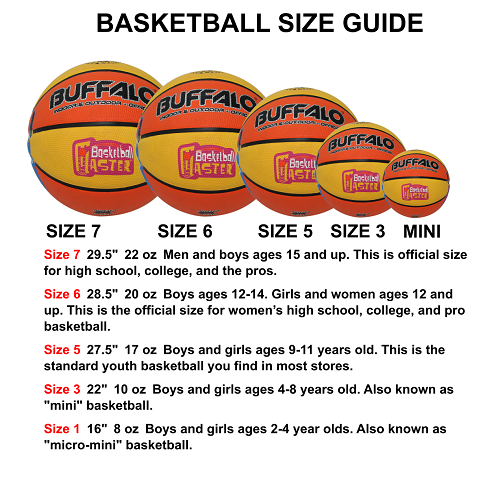
Basketball Rubber Size Guide

Basketball rubber size guide: Choose the right size for every age
Choosing the right basketball can make a big difference in how the game feels, especially for kids and beginner players. Rubber basketballs are commonly used in Australian schools, outdoor courts and for casual play at home because they are durable, easy to grip and built to handle hard surfaces.
Getting the size right helps players develop proper ball control, shooting technique and confidence as they learn the game. This basketball rubber size guide makes it easier to select the right ball for each stage.
Basketball size chart (Rubber basketballs)
|
Basketball size |
Circumference |
Age group |
Typical use |
|
Size 7 |
29.5 in (75cm) |
Boys and men 12+ |
Senior school sport, clubs and outdoor courts |
|
Size 6 |
28.5 in (72.5cm) |
Girls 9+ and boys 9–12 |
School competitions, training and casual play |
|
Size 5 |
27.5 in (69.5cm) |
Ages 8–9 |
Primary school sport and skill development |
|
Size 4 |
25.5 in (64.5cm) |
For children up to 7 years old |
Junior training and backyard play |
|
Size 3 |
22.5 in (55.9cm) |
Suitable for all ages |
Early coordination and fun play |
Which rubber basketball size should you choose?
-
Choosing a size by age
Ages 2 to 8 suit mini basketballs or size 3 for easier grip and control. Ages 9 to 11 typically use size 5 basketballs in primary schools. From age 12 and up, players move to size 6 or size 7 as strength develops.
-
Choosing a size by gender
From secondary school level, size 6 basketballs are used for girls’ school sport and training, while size 7 basketballs are standard for boys and men in senior school and club play.
-
Choosing a size by usage
For school sport and backyard play, size 5 and size 6 rubber basketballs offer good control and durability. Outdoor courts and driveways suit size 6 or size 7 rubber basketballs, depending on age and level.
Rubber vs composite vs leather basketballs
|
Material |
Durability |
Surface type |
|
Rubber |
Very high |
Outdoor courts, schools, casual play |
|
Composite |
Medium |
Indoor courts, mixed use, some can be used outdoors |
|
Leather |
Lower |
Indoor competition courts |
Common mistakes when choosing a basketball size
- Buying a full-size basketball for younger players can make handling and shooting more difficult
- Choosing a ball based on price alone, rather than matching the size to age and usage
- Using the same basketball size across different age groups in schools leading to confusion during classes and training
- Selecting a size without considering where the ball will be used, such as indoor courts, outdoor courts or casual play
Shop basketballs with Buffalo Sports
Now that you know the right size, explore basketballs and related equipment from Buffalo Sports.
FAQs
What size basketball do schools use in Australia?
Most Australian schools use size 5 for primary students, size 6 for upper primary and girls’ competitions and size 7 for senior boys and adults.
Can kids train with a full-size basketball?
Younger children can struggle with full-size basketballs. Using the correct size improves control and helps build proper technique earlier.
Is basketball size based on age or height?
Age is the most common guide for school and recreational play. Height can be considered, but age-based sizing works well for most players.
Can adults train with a smaller basketball size?
Yes. Some adults use size 6 or size 5 basketballs for skill drills, casual play or hand strength training.